
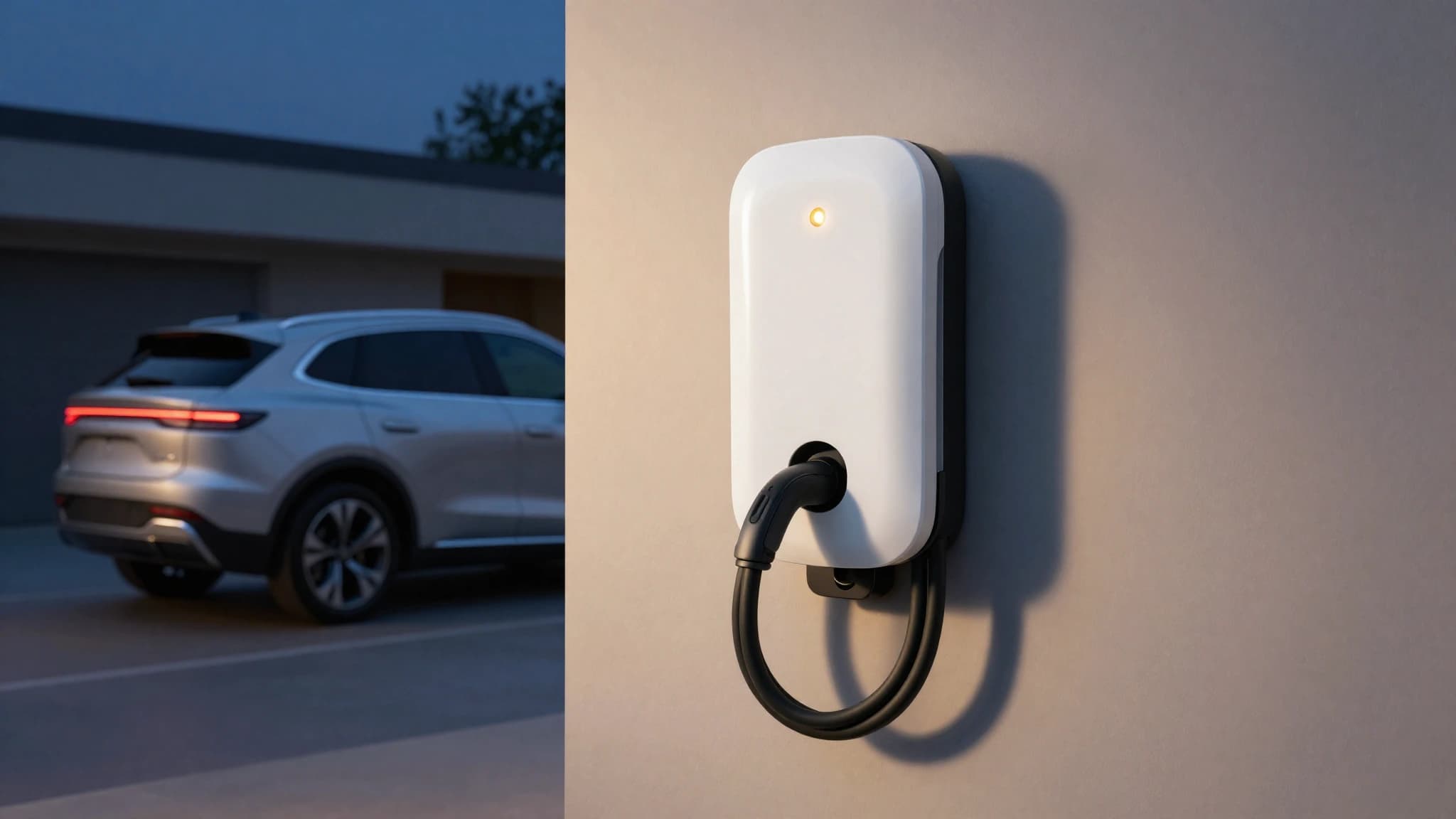
EV Charging
How Much Does It Cost to Install an EV Charger at Home?
A straight-talk 2026 cost breakdown for Seattle-area homeowners — what the charger, labor, and permit really run, and how to know if your panel needs an upgrade first.
Here's the quick answer: for most Seattle-area homes, the cost to install an EV charger at home runs $1,000 to $2,500all in — the charger itself is $400 to $700, and the rest is labor, materials, and the permit. If your panel is close and has spare capacity, you're at the low end. If the charger sits across the garage from the panel, or the panel is full and needs an upgrade first, you climb toward the top — and occasionally past it.
That range is wide on purpose, because the charger is the cheap part — the wiring between your panel and the parking spot is what moves the number. This guide breaks down exactly what you're paying for, cause by cause, so you can read a quote and know it's fair. It's the same math we run in the field on our EV charger installation work across the greater Seattle area.
Level 1 vs Level 2: What You're Paying For
Almost every home install people ask about is a Level 2charger, and it's worth knowing why before you look at prices.
Level 1 — The Free Option You Already Own
Level 1 is the cord that came with your car plugged into an ordinary 120-volt outlet. It costs nothing to “install” if you have an outlet in the garage, but it only adds three to five miles of range per hour — fine for a plug-in hybrid or a short commute, painfully slow for a full battery EV. Most owners outgrow it fast.
Level 2 — The Real Home Charger
Level 2 runs on a dedicated 240-volt circuit — the same voltage as your dryer or range — and adds roughly 20 to 40 miles of range per hour, enough to fill an empty battery overnight. That dedicated circuit is what needs installing, and it's where your money goes. Everything below is about the Level 2 install.
What Drives the Price
Two installs on the same street can quote hundreds of dollars apart, and it's almost never the charger brand. Four things move the number:
- Distance from the panel to the charger — every foot of conduit, wire, and wall to fish adds labor and material
- Spare capacity in your panel — a panel with room is a simple breaker add; a full one may need an upgrade
- The run itself — a surface conduit along a garage wall is cheap; fishing wire through finished, insulated walls is not
- Charger amperage — a 48-amp charger needs heavier wire and a bigger breaker than a 32-amp unit, so the circuit costs a little more
Watch the “$500 Install” Ads
A rock-bottom flat rate almost always assumes the best case: a charger mounted right next to a panel with open slots, on a short surface run, no permit pulled. The moment your house doesn't match that picture, the price climbs — or worse, the corner gets cut. We'd rather quote the real number after seeing your panel than sell you a teaser rate.
Want a Real Number?
Get a Hard Quote on Your Home Charger
Mad Dog Electric installs Level 2 EV chargers across the greater Seattle area — licensed, bonded & insured, permit included, with a hard quote before any work starts. Estimates are always free.
EV Charger Installation Cost Breakdown
Here's what the pieces run in the Seattle area in 2026. These are honest ranges, not teaser rates — and because we quote hard numbers up front, the price you're given is the price you pay.
| Line Item | Typical Cost | Notes |
|---|---|---|
| Level 2 charger (hardware) | $400 – $700 | Buy your own or bundle it in |
| Labor + materials (short run) | $600 – $1,200 | Charger near panel, capacity to spare |
| Long or finished-wall run | +$300 – $1,000 | Distance + fishing walls, not surface conduit |
| Permit & inspection | $100 – $300 | Required in WA; built into the quote |
| Panel upgrade (only if needed) | $2,500 – $4,000+ | 100A → 200A when the panel is full |
| Typical all-in (no panel work) | $1,000 – $2,500 | What most Seattle homes actually pay |
The panel-upgrade row is the one that surprises people, so let's deal with it head-on.
Do I Need to Upgrade My Panel?
A Level 2 charger pulls 40 to 60 amps continuously — a big, steady load. The question is whether your panel has room for it on top of everything else your house already runs. An electrician answers that with a load calculation: a real accounting of your service size and existing loads, not a guess.
Many modern 200-amp panels have the headroom and need nothing more than a new breaker. Older 100-amp panels — common in Seattle homes built before the 1990s — are often already near their limit, and adding a charger tips them over. When that happens you've got two paths: a full electrical panel upgrade, or a load-management device that lets the charger share capacity by backing off when the dryer or oven kicks on — often a cheaper way to avoid a full upgrade. We'll tell you which one your house actually needs before quoting a dollar of it.
Do I Need a Permit?
Yes. Installing a 240-volt circuit is permitted, inspected electrical work under Washington state code. A reputable electrician pulls the permit and schedules the inspection as part of the job — it's in the quote, not a surprise. Two reasons it matters beyond the law: an uninspected install can void your homeowner's insurance if it ever causes a fire, and it becomes a bargaining chip against you when you sell. The permit is cheap insurance in every sense.
How Long Does It Take?
A clean Level 2 install — charger near the panel, capacity to spare — is usually a half-day job, three to five hours plus the inspection. A long run through finished walls, or a panel upgrade done at the same time, can stretch it to a full day or a second visit. Either way you'll have the realistic timeline in writing before we start.
Can I Install It Myself?
Mounting the charger head on the wall is homeowner-friendly. The 240-volt circuit that feeds it — the breaker, the wire gauge, the lugs at the panel — is not the place to learn on the job. A 48-amp continuous load on undersized wire or a loose connection is a real fire hazard, and it's exactly what the permit and inspection exist to catch. The sensible split: have a licensed electrician run and connect the circuit, then mount your own charger if you want to trim a little labor. If you're weighing the DIY route because a breaker keeps giving you trouble, our guide on why a circuit breaker keeps tripping is worth a read first.
EV Chargers in Older Seattle Homes
Puget Sound has one of the highest EV-adoption rates in the country, and a lot of that demand lands on housing stock that predates the electric car by decades. Craftsman and mid-century homes across Seattle, Bellevue, and the Eastside were wired for a fraction of today's load, so the panel question comes up more here than in newer suburbs. It's also why bundling the charger with a panel upgrade — or a whole-house generator for our windstorm outages — often makes sense: one permit, one crew, one trip up the ladder.
Bottom line: budget $1,000 to $2,500 for a typical home EV charger install, and expect an honest conversation about your panel before anyone quotes a number. We install Level 2 chargers across the greater Seattle area, from Everett down to Mercer Island — licensed, bonded & insured (Washington contractor license MADDODE754OB), permit included, hard quote up front. Reach us through the contact form or book a visit online.
FAQ
Frequently Asked
Questions
Ready to Charge at Home?
Free estimate, upfront hard-quote pricing, permit included, and a licensed electrician at your door. No teaser rates, no guesswork — just a real number.