
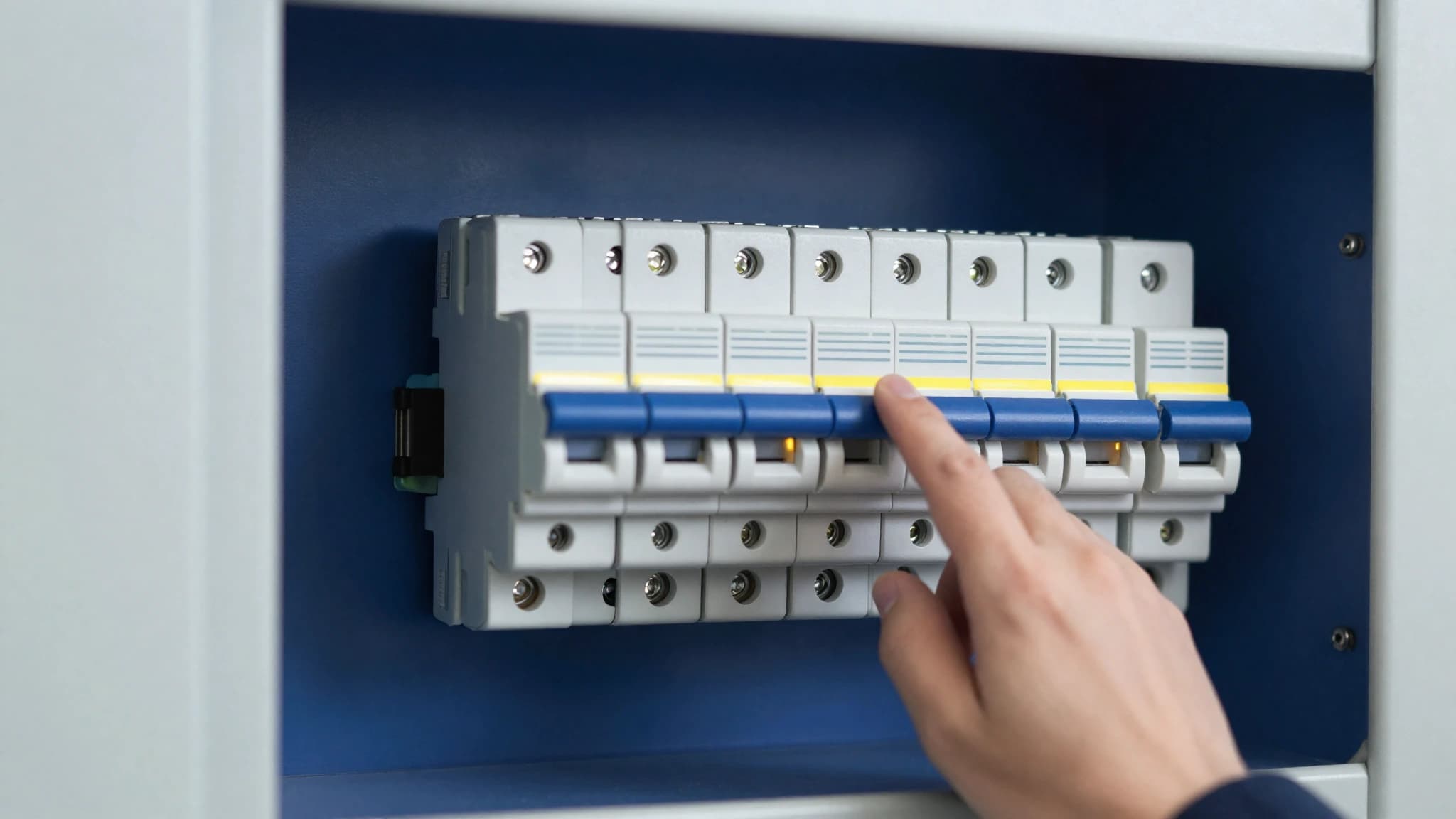
Electrical Tips
Circuit Breaker Keeps Tripping?Common Causes & What to Do
A breaker that won't stay on is protecting you from something — learn to read the trip, reset it safely, and spot the signs it's really the panel.
When a circuit breaker keeps tripping, it's telling you one of three things: the circuit is overloaded (the most common cause by far), there's a short circuit somewhere in the wiring, or current is leaking to ground. The breaker isn't broken — it's doing exactly what it was built to do: cut the power before the wiring inside your walls overheats. So the real question isn't how to make the tripping stop. It's what the breaker is protecting you from.
This guide shows you how to read the trip — the timing and the tells that separate a harmless overload from a problem that needs a licensed electrician. You'll get a safe reset-and-diagnose routine, a straight answer on when tripping is dangerous, and the signs the trouble isn't the circuit at all — it's an aging breaker box that's a candidate for panel upgrades & remodels.
Mad Dog Electric chases down stubborn breakers all over the greater Seattle area — from 1960s ramblers in Shoreline running whole bedrooms on one circuit to new builds where a space heater found the weak link. Here's what 15 years in the trade says your breaker is trying to tell you.
The Three Reasons Breakers Trip
First, the 30-second version of what a breaker does. Every circuit in your home is rated to carry a set amount of current — usually 15 or 20 amps. The breaker sits in your panel watching that circuit, and the moment current climbs past the rating, it snaps off. That limit exists because wire has a heat limit: push 30 amps through a 15-amp wire and the copper heats up, the insulation cooks, and eventually something catches. Every trip is the breaker stepping in front of that outcome.
1. Circuit Overload
An overload is simple math: the stuff on the circuit wants more current than the circuit can deliver. The giveaway is timing — an overloaded breaker trips seconds to minutes after a big load kicks on, because it's responding to heat building up, not an instant spike. The classic version: the microwave and the toaster sharing a kitchen circuit, or a space heater joining a bedroom circuit that's already running a TV and two chargers. The fix usually costs nothing — move something to a different circuit. If you're playing musical outlets every winter, the circuit needs help: a dedicated line for the big load, or more circuits overall.
2. Short Circuit
A short is a hot wire touching a neutral or another hot — a direct path with almost no resistance, so current spikes to hundreds of amps in a fraction of a second. The tell: the breaker trips instantly, the moment you reset it or the moment something on the circuit switches on. You might also catch a buzz, a pop, a burnt smell, or scorch marks around an outlet. A short is not a redistribute-the-load problem, and every reset shoves full fault current through whatever is damaged. Leave the breaker off and get it looked at.
3. Ground Fault
A ground fault is current escaping the circuit — leaking through moisture, worn insulation, or a failing appliance and heading to ground, sometimes through anything (or anyone) touching it. That's the whole reason GFCI protection exists: a GFCI breaker or outlet compares the current going out against the current coming back and cuts power if even about 5 milliamps goes missing. AFCI breakers — required in most living areas of newer homes — do a similar job for arcing at loose, sparking connections that a standard breaker can't see.
Is It Dangerous if a Circuit Breaker Keeps Tripping?
Honest answer: the trip itself is the safe part. A breaker that trips is a breaker that works. The danger shows up in how people respond. So here's the rule we give every homeowner — the reset-once rule. Reset a tripped breaker one time. If it holds, note what was running and lighten the load. If it trips again, immediately or within a few minutes, stop. The breaker isn't being dramatic; it's interrupting a real fault, and every extra reset pushes fault current through damaged wiring.
And never “fix” a tripping breaker by swapping in a bigger one. A 20-amp breaker on wire rated for 15 amps doesn't upgrade the circuit — it removes the only thing keeping that wire from overheating inside your walls. It's one of the most dangerous shortcuts in residential wiring, and we still find it in panels around the greater Seattle area more often than we'd like.
Safety First
Scorch marks or melted plastic at an outlet, a burning smell near the panel, buzzing or crackling, or a breaker that's hot to the touch — those are signs of a failure in progress, not a nuisance trip. Leave the breaker off, keep the circuit dead, and call a licensed electrician now. You can reach the pack fast through our contact page.
Track Down the Culprit
If none of those warning signs are present, you can diagnose most tripping breakers yourself in about ten minutes — no tools, and nothing that puts your hands near live wiring:
- Turn off and unplug everything on the tripped circuit — lamps, chargers, appliances, power strips.
- Reset the breaker: push it firmly all the way to OFF first, then back to ON so it snaps solidly into place.
- If it trips with nothing plugged in, stop — that's a wiring fault, not an appliance. Leave it off and call an electrician.
- If it holds, plug things back in one at a time, waiting a minute or two between each.
- When the breaker trips again, you've found your suspect — a failing device, or the load that pushes the circuit past its limit.
- Confirm it: run the suspect on a different circuit. Trips there too? Bad device. Runs fine? Overloaded circuit.
Circuit Breaker Keeps Tripping in One Room
When it's always the same room, it's almost always the same story: one circuit doing too much. Plenty of older Seattle-area homes were wired with two or three bedrooms sharing a single 15-amp circuit — fine in 1975, hopeless against a modern bedroom with a space heater, a monitor, a gaming PC, and a heated blanket. Space heaters are the number-one offender we see every winter: one 1,500-watt heater eats roughly 80 percent of a 15-amp circuit's capacity all by itself.
The workaround is moving loads to outlets on another circuit — they don't always follow room boundaries, so map them with a lamp. The real fix is a dedicated circuit for the heavy hitter, which is routine work for a licensed electrician and cheaper than most people expect.
Need a Hand?
Tired of Resetting the Same Breaker?
Mad Dog Electric finds the real cause — overload, bad breaker, or a panel past its prime — and quotes the fix upfront before we touch a wire. Licensed, bonded & insured, with free estimates across the greater Seattle area.
What Fixes Cost at a Glance
Every tripping-breaker call starts in the same place — figuring out which of these you've got. Here's how the causes compare, and what fixing each one typically involves in the Seattle area:
| Cause | Telltale Signs | Typical Fix | Ballpark Cost |
|---|---|---|---|
| Circuit overload | Trips seconds to minutes after a big load starts; same time of day, same appliances | Redistribute loads; add a dedicated circuit if it's chronic | $0 to redistribute; a few hundred dollars for a new circuit |
| Short circuit | Trips instantly on reset; buzzing, popping, burnt smell, scorch marks | Leave it off — licensed repair of the damaged wiring or device | Varies with wiring access; usually modest once the fault is found |
| Ground fault | GFCI trips near kitchens, baths, garages, or outdoors; worse in wet weather | Dry out the outlet; replace the failing appliance or GFCI device | Often free to a couple hundred dollars |
| Worn-out breaker | Random trips under light load; breaker feels loose or won't stay set | Replace the breaker — and find out why it wore out | A couple hundred dollars, typically |
| Failing or undersized panel | Multiple circuits trip; panel is warm, buzzing, or full; Federal Pacific or Zinsco label | Panel replacement or 200-amp service upgrade | Roughly $2,500–$7,500 for most upgrades |
GFCI Circuit Breaker Keeps Tripping?
GFCI protection guards the circuits where electricity and water share a room — bathrooms, kitchens, laundry, garages, and anything outdoors. Around Puget Sound, that last one matters: our long wet winters soak outdoor outlets, holiday-light connections, and crawl-space wiring, and a GFCI will trip on moisture long before you'd ever notice a problem. If your GFCI breaker trips every time it rains sideways, water intrusion is the first thing to rule out.
The other classic culprits are aging appliances — garage freezers and spare fridges are notorious — and heating elements with worn insulation, like an old water heater or a well-used hair dryer. The diagnosis is the same unplug-and-reload drill from above, just applied to whatever the GFCI covers.
One nuance: use the test button before you trust the reset. Press TEST — the breaker should trip decisively. Then reset it and see if it holds with nothing plugged in. A GFCI breaker that won't reset on an empty circuit, or won't trip when you press TEST, has failed and needs replacing. They do wear out, especially in damp garages and exterior panels.
When It's the Panel, Not the Circuit
Sometimes the breaker is just the messenger. If several different circuits trip, the panel hums or buzzes, breakers feel hot, or trips happen with no obvious load, the hardware in the box is what's failing. Breakers are mechanical devices — after decades of service they weaken and start tripping below their rating, or worse, stop tripping at all.
Two names deserve a specific warning. Federal Pacific (Stab-Lok) and Zinsco panels — common in Washington homes built from the 1950s through the early 1980s — have documented histories of breakers failing to trip under fault conditions, and many insurers won't write or renew policies on homes that still have them. If you open the panel door and see either name, put a replacement on the short list even if nothing seems wrong. Watch the softer symptoms too: breakers that trip while your lights dim or flicker when big appliances kick on is a panel waving two flags at once.
The other panel problem isn't age — it's arithmetic. A 100-amp service was the standard for decades, and modern all-electric living blows right past it. Add a Level 2 EV charger pulling up to 48 amps on its own dedicated circuit, then a heat pump and an induction range, and a 100-amp panel has nothing left to give. If the tripping started when a big new load moved in, the circuit-by-circuit fixes above are band-aids — the service itself needs to grow. Most Seattle-area panel and service upgrades land between $2,500 and $7,500 depending on whether the service entrance needs work, and every Mad Dog Electric quote is a line-by-line hard number — permitted and inspected under our WA contractor license, MADDODE754OB.
A tripping breaker is annoying, but it's the good kind of annoying — the system catching a problem while it's still cheap to fix. Read the timing, respect the reset-once rule, and don't ignore a breaker that keeps arguing with you. If your mystery is the opposite one — a dead outlet while the panel looks fine — start with our guide on troubleshooting a dead outlet — and if you're replacing the box anyway, see how smart electric panels watch every circuit in real time and shed big loads before a breaker ever has to trip.
FAQ
Frequently Asked
Questions
Stop Babysitting the Breaker Box
Tell us what trips and when — we'll track down the cause, quote the fix upfront, and leave you with a panel you never have to think about.